


I provide psychotherapy for children, adolescents and adults in a warm, safe and non-judgemental space.
I believe that everyone has their own story, and that therapy should be shaped around the person sitting in front of me. My approach is client-led, neuro-affirmative and trauma-informed, which means I meet each person with curiosity, compassion and respect for their individual experiences.
Sometimes life can feel overwhelming, and it is not always easy to find the words for what is happening inside. Therapy can provide a space to slow things down, make sense of difficult experiences and begin to understand ourselves and our relationships in a different way.
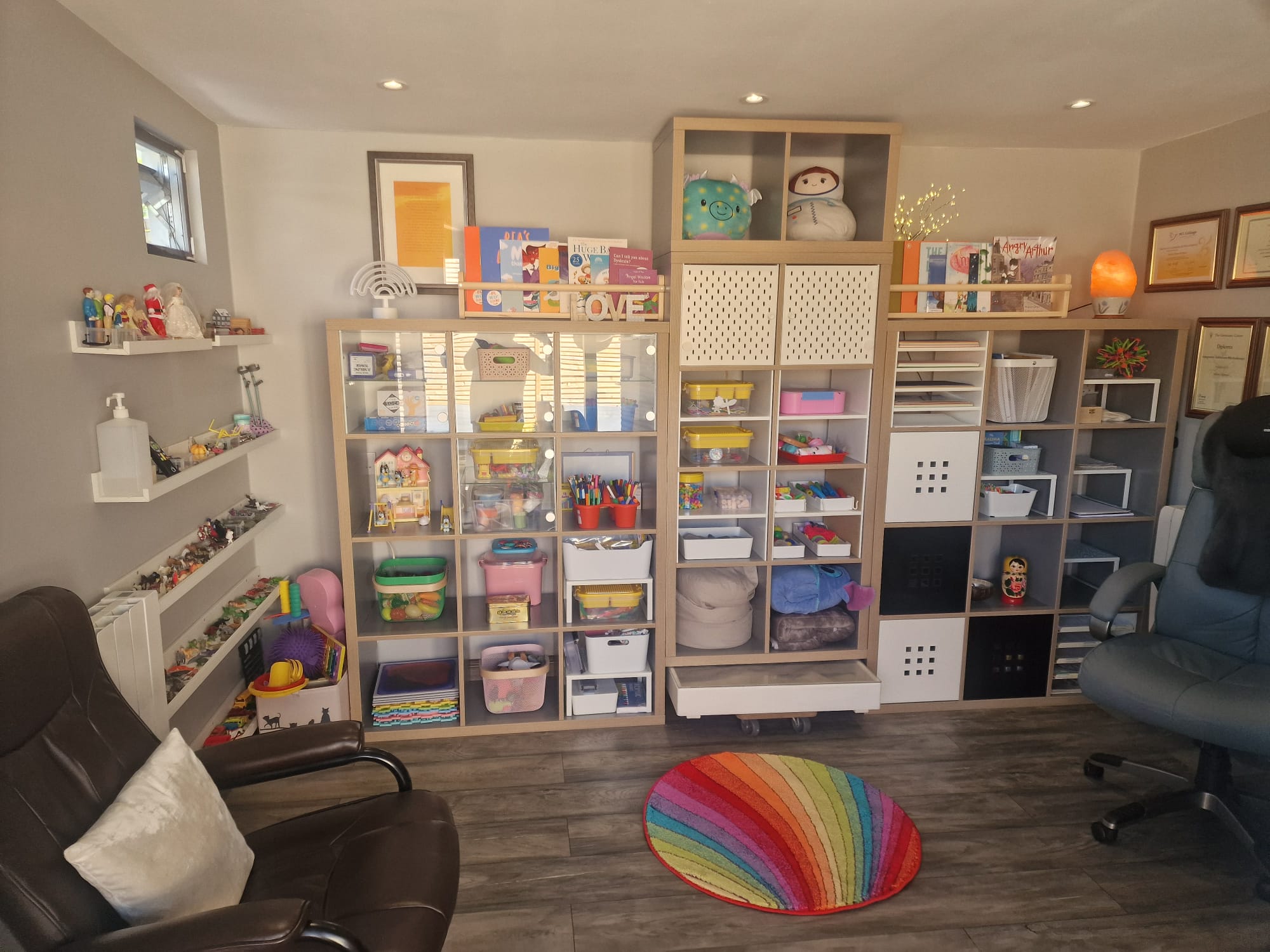
I work from a neuro-affirmative and trauma-informed perspective, recognising that people respond to the world in different ways and that our experiences can shape how we think, feel and relate to others.
My sessions are client-led. This means I don’t believe in a one-size-fits-all approach. Therapy is different for every person, and I work with you to understand what you need and what feels helpful.
Play Therapy for Children
For children, play is often their natural way of communicating. What a child cannot always explain with words may come through in their play, drawings, stories, behaviour or relationships.
Play therapy gives children a safe place to express what they are feeling and experiencing, without pressure to find the ‘right’ words. Through play and creative expression, we can gently explore difficult emotions, experiences and relationships together.
I work with children experiencing a range of difficulties, including:
Anxiety and worries
Fears
Anger and emotional outbursts
Sleep difficulties and nightmares
Social difficulties
Trauma
Post-traumatic stress
Behavioural difficulties
Withdrawal or isolation
Difficulty expressing emotions
Parental separation
Bereavement and loss
Changes or regression in development
School difficulties
Attention and concentration difficulties, including ADD and ADHD
Experiences of abuse
Self-harm and emotional distress
How Play Therapy Works
Children communicate in many ways, so I use a variety of creative, play-based approaches based on what feels right for each child.
Sessions may include:
- Sand play
- Art and creative activities
- Imaginative and character play
- Stories and metaphor
- Creative self-expression
- Board games
- Child-led play
The aim is not to tell a child what to play or how to express themselves. Instead, I provide a safe and accepting environment where they can explore at their own pace.
Over time, as trust develops, children can begin to make sense of their feelings and experiences and develop new ways to express themselves and manage difficult emotions.
Working with Parents & Caregivers
Parents and caregivers are an important part of a child’s therapeutic journey.
Before therapy begins, I meet with parents or primary caregivers to talk through what has been happening and to understand the child’s history, circumstances and current difficulties. This gives me an opportunity to hear your concerns and observations and to explain how therapy will work.
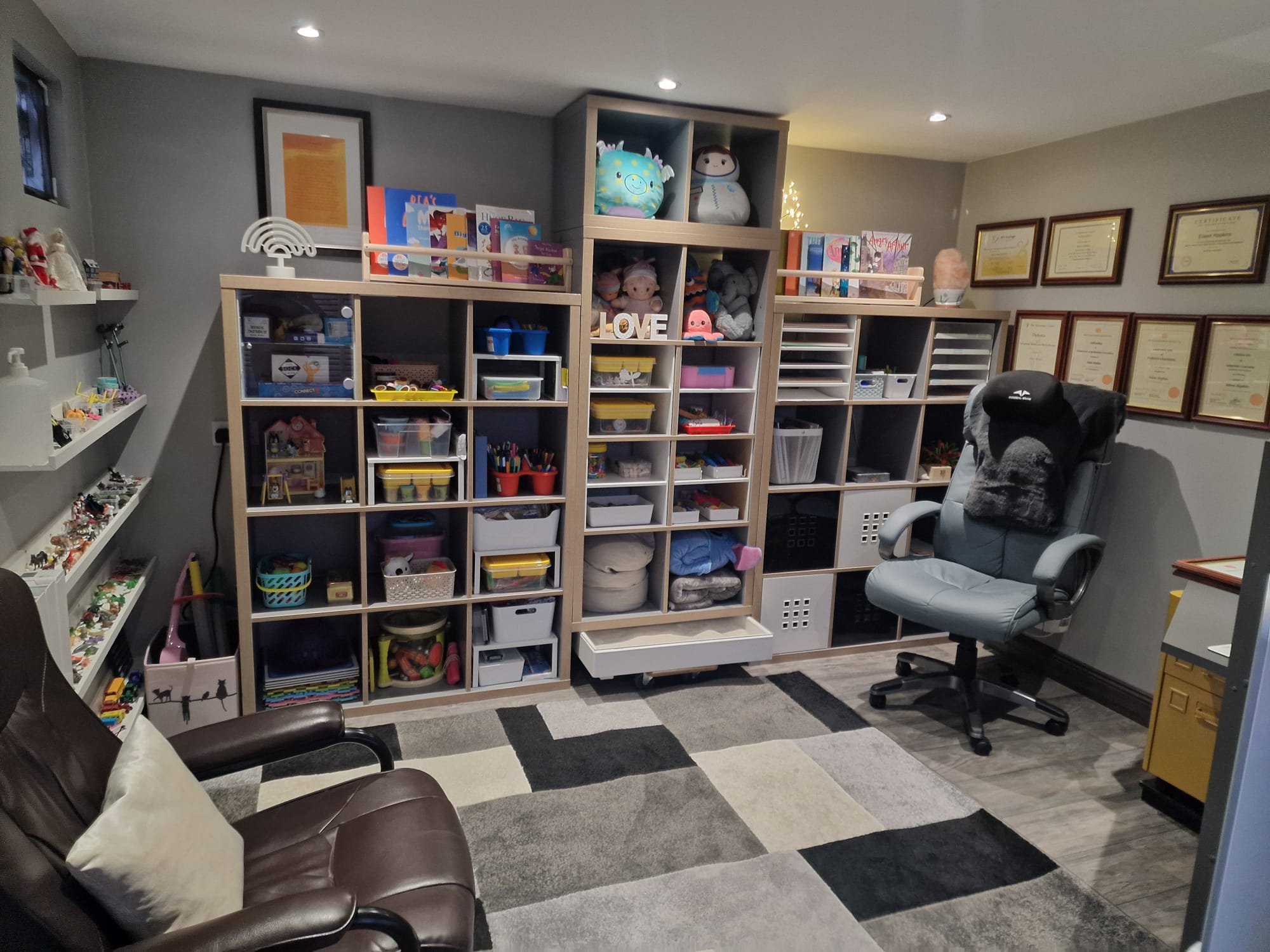
Throughout the process, parent or caregiver meetings may take place alongside the child’s sessions. These meetings provide an opportunity to discuss progress, concerns, or changes that may be needed, and to think together about how best to support the child.
I can also support parents and caregivers with emotional regulation, behavioural development and communication, helping to build greater understanding within the family.
Where appropriate, I can help parents and children understand each other’s experiences and find more supportive ways of communicating.
Adolescent Counselling & Psychotherapy
Adolescence can be a complicated time. Young people are finding their identity, becoming more independent and navigating friendships, family relationships, school, social media and the pressures of growing up.
Sometimes this can leave a young person feeling confused, overwhelmed, anxious or unsure of themselves.
I offer adolescents a space where they can talk openly, without judgement, and take things at their own pace.
I support adolescents with difficulties including:


